
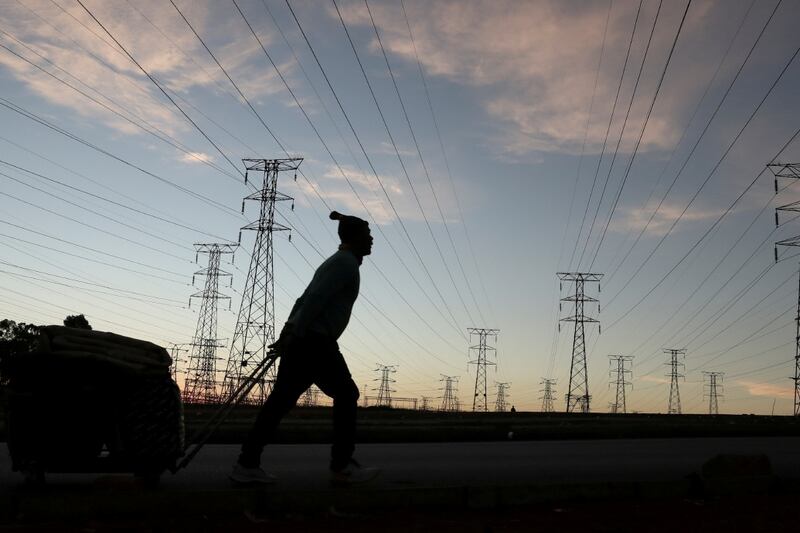
The lights are staying on in South Africa. Load-shedding has all but disappeared. Yet the cost of keeping those lights burning has soared beyond the reach of many households.

The reasons for the end of blackouts are layered. Heavy private investment in rooftop solar by homeowners and companies has taken pressure off the grid; independent power producers have added large solar and wind farms, supported by (messy) procurement rounds that have finally gained traction; and the private sector, tired of waiting for government action, has financed everything from solar carports at office parks and shopping centres to embedded generation systems.

But it would be wrong not to give Eskom credit, too. Under the leadership of chair Mteto Nyati and CEO Dan Marokane, Eskom has again begun to look like a utility that works.
It’s still early days, but the number of unplanned outages has fallen sharply, a sign of improved operational discipline. Governance has been tightened, with Nyati bringing to the boardroom the same steady hand he showed when he led Microsoft South Africa, MTN South Africa and Altron Group. His track record in restoring credibility to complex organisations — and providing the necessary governance oversight — has been vital in Eskom’s nascent recovery.
Yet operational progress cannot disguise a real problem that must still be solved: Eskom remains a monopoly, and monopolies breed excess.
Over the past decade, electricity tariffs have climbed by 177%. With energy regulator Nersa often acting as little more than a rubber stamp (and sometimes making egregious mistakes), price hikes have far outstripped inflation.
The solution lies not in further entrenching Eskom’s dominance but in dismantling it
For many households, electricity now rivals rent or food as a major expense. For small businesses, tariffs are a crushing input cost that erodes their competitiveness. South Africa’s electricity prices, once among the lowest in the world, no longer offer the economy a competitive edge.
The result is a new kind of energy poverty: South Africans may no longer be in the dark because of load-shedding, but many are switching off appliances because they simply cannot afford to pay.
And let’s face it: operational stability without affordability is a hollow victory. The solution lies not in further entrenching Eskom’s dominance but in dismantling it. We have seen this before.
In the bad old days, Telkom abused its monopoly, charging extortionate prices for fixed-line services as the government doggedly — and mistakenly — protected it from competition.
Only after the telecommunications market was liberalised in 2008, through court action brought by Craig Venter, former CEO of Altron Group subsidiary Altech, did the picture change. The government was forced to abandon its failed policy of “management liberalisation” of the sector.
Today, South Africans enjoy relatively cheap fibre broadband, and mobile data prices have plummeted (though some would argue they need to fall further) while intense competition has driven innovation in broadband services.
Electricity should be no different. Where Eskom has a natural monopoly — such as long-haul transmission — its tariffs should be tightly regulated. Everywhere else, robust competition should be the norm.
From generation to retail supply, markets around the world show what happens when incumbents are forced to compete.
The UK unbundled generation and distribution in the 1990s, with dozens of private companies driving efficiency. In Texas, competitive generation markets combined with consumer choice delivered some of the lowest electricity prices in the US. Even developing countries such as India have experimented successfully with competitive wholesale markets.
South Africa must learn from these examples. Liberalisation is not about dismantling Eskom overnight; it is about creating space for others to generate, trade and sell power on equal terms. It is about building a regulator with the spine to stand up to vested interests. And it is about giving consumers, whether households or businesses, the right to choose.
Eskom deserves credit. Nyati’s leadership has restored focus on governance; Marokane’s team has stabilised operations and begun to claw back credibility. The apparent end of load-shedding owes as much to private investment as it does to Eskom, but without the utility’s own improvements the outcome would look very different.
Affordability must be the next big focus. If South Africa continues to rely on a monopoly structure, propped up by a weak regulator, electricity will remain expensive. Robust competition and strong regulatory oversight are the only sustainable ways of driving down costs.
The end of blackouts is great news. But it’s not the end of the story. As was the case in telecoms, dismantling Eskom’s monopoly will be transformative — for the energy sector and, more importantly, for South Africa’s economy.
McLeod is editor of TechCentral




Would you like to comment on this article?
Sign up (it's quick and free) or sign in now.
Please read our Comment Policy before commenting.